Electrical Enclosure and Junction Box RFQ Checklist
A practical sourcing checklist for electrical enclosures, junction boxes, NEMA ratings, materials, conduit fittings, documentation, domestic options, and approved alternates.
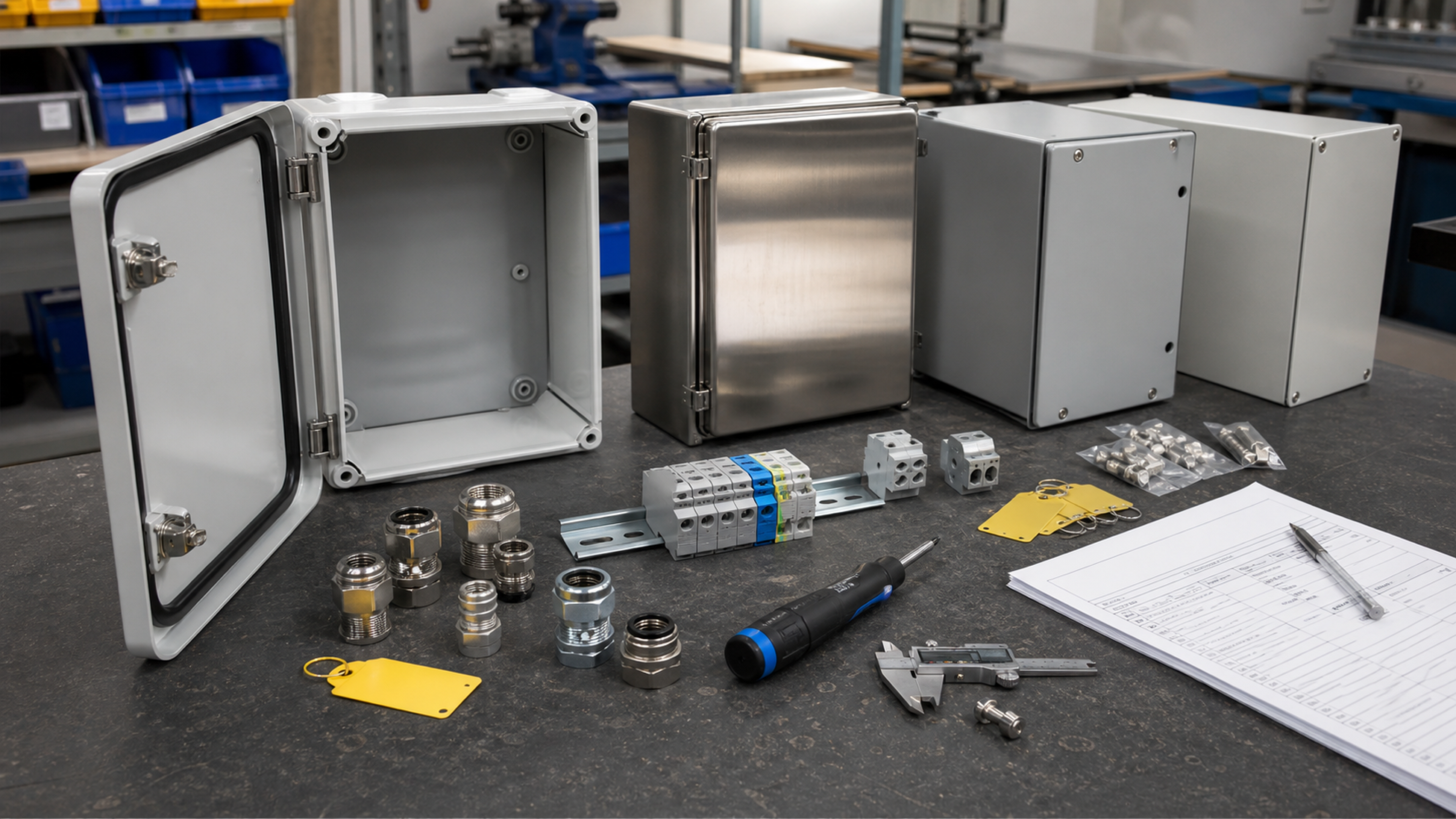
Electrical enclosures and junction boxes look like simple catalog items until a quote misses the rating, material, size, gland plate, mounting detail, conduit entry, or documentation requirement that makes the box usable in the field. A request that says only "NEMA box" or "junction enclosure" can leave too much room for the wrong material, gasket, finish, or accessory package.
This checklist is built for industrial maintenance buyers, PVF manufacturers, panel shops, and job shops that need cleaner RFQs for electrical enclosures, junction boxes, conduit fittings, cable glands, terminal blocks, DIN rail, hardware, and related MRO items. It focuses on the fields Westgate needs to quote practical, domestic, documented, and approval-ready options without slowing the job down.
Start with the environment and enclosure function
An electrical enclosure should be sourced against the environment it protects against, not only against its outside dimensions. Include whether the box is indoors, outdoors, washdown, corrosive, dusty, humid, hot, cold, vibration-prone, or located near process equipment. State whether the enclosure protects terminations, controls, instrumentation, power distribution, a disconnect, a PLC, a junction point, or a field repair splice.
That context helps separate a painted steel wall box from stainless, fiberglass, aluminum, polycarbonate, gasketed, hinged, screw-cover, disconnect, windowed, or hazardous-location-related options. It also helps Westgate flag adjacent items such as conduit bodies, fittings, reducers, cable glands, terminal blocks, labels, grounding hardware, sealants, fasteners, and tools that may belong on the same RFQ.
Name the rating and approval requirements clearly
Use the required rating language from the drawing, plant standard, or equipment specification. Buyers commonly need NEMA or UL-type enclosure ratings, and some projects also call out listing, agency, washdown, corrosion, dust, or customer-approved manufacturer requirements. If the rating is not known, include photos of the existing box, nameplate, door gasket, conduit entries, and surrounding environment.
Do not let a supplier guess between general indoor protection, outdoor weather exposure, stainless washdown service, or corrosive-area service. If alternates are allowed, define the approval boundary up front: same rating only, stainless required, domestic option preferred, no material substitution, listed enclosure only, or quote stocked and documented options separately.
Control size, mounting, and door configuration
The RFQ should state usable inside space, outside dimensions, depth, mounting style, wall or floor mount, back panel requirement, hinged or screw cover, latch type, window requirement, gland plate, removable door, and whether existing hole patterns or conduit entries must be matched. A box that has the right nominal size can still fail if the internal components, bend radius, terminal blocks, or fittings do not fit.
For retrofit work, include field measurements and photos with a ruler whenever possible. For new builds, attach the drawing, panel layout, bill of material, or prior purchase order. If Westgate may quote the next larger stocked size or an alternate depth for approval, say so in the first request.
Quote conduit entries and internal accessories with the box
Many enclosure delays come from treating the box as separate from the fittings that make it installable. List conduit size and type, hub requirements, cable gland size, reducer or adapter needs, sealing washers, locknuts, grounding lugs, terminal blocks, DIN rail, wire duct, back panels, labels, plugs, drains, vents, and mounting hardware when those items are part of the job.
For mixed PVF and electrical work, the same RFQ may also need stainless fasteners, gasket material, strut, clamps, anchors, pipe supports, tools, and safety supplies. A practical quote should show which items are stocked, which are domestic, which are documented, and which accessories must match the enclosure material or rating.
Match material to corrosion and washdown exposure
Material selection should follow the service area. Painted steel can be practical for many indoor industrial locations. Stainless steel may matter around washdown, chemical exposure, outdoor corrosion, food-adjacent areas, wastewater, marine exposure, or customer standards. Fiberglass, polycarbonate, aluminum, and other materials may solve weight, corrosion, insulation, or radio-frequency needs.
Call out finish, stainless grade when specified, gasket material when known, and whether hardware must match the enclosure body. If the project requires domestic sourcing, Buy America-related restrictions, country of origin, or an approved manufacturer list, include that requirement before the quote is built.
Ask for documentation before receiving needs it
Some enclosure buys are ordinary maintenance replacements, while others need paperwork for customer builds, quality files, electrical inspection, or receiving controls. Name required documents in the first RFQ: COC, country of origin, manufacturer data sheet, listing information, material certificate, paint or coating data, installation instructions, or customer-specific certificate.
A useful quote separates fast stocked options from domestic, documented, and approval-required options. That visibility lets purchasing choose speed, compliance, or a staged shipment without discovering after award that the enclosure is available but the required paperwork or accessories are not.
RFQ checklist
- Indoor, outdoor, washdown, corrosive, dusty, humid, vibration, or temperature exposure
- Enclosure function such as junction, controls, instrumentation, disconnect, PLC, or splice repair
- Required NEMA or UL-type rating, listing need, approved manufacturer, and substitution boundary
- Material such as painted steel, stainless, fiberglass, aluminum, or polycarbonate
- Inside space, outside dimensions, depth, mounting style, cover style, latch, window, and back panel
- Conduit entries, hubs, cable glands, reducers, sealing washers, locknuts, drains, and vents
- Terminal blocks, DIN rail, wire duct, grounding lugs, labels, plugs, and mounting hardware
- Domestic sourcing, country of origin, no-substitution rule, or alternate approval process
- COC, manufacturer data sheet, listing information, coating data, or customer paperwork
- Needed delivery date, ship-to ZIP code, outage priority, and partial shipment rules
Related Westgate resources
Send the enclosure details before the install crew waits
Westgate can quote electrical enclosures, junction boxes, conduit fittings, cable glands, terminal blocks, domestic fasteners, PVF parts, gaskets, tools, and related MRO items from one mixed RFQ. Send the drawing, nameplate photo, panel layout, prior PO, or field measurements and we will flag missing fields before sourcing begins.
Request a Quote